
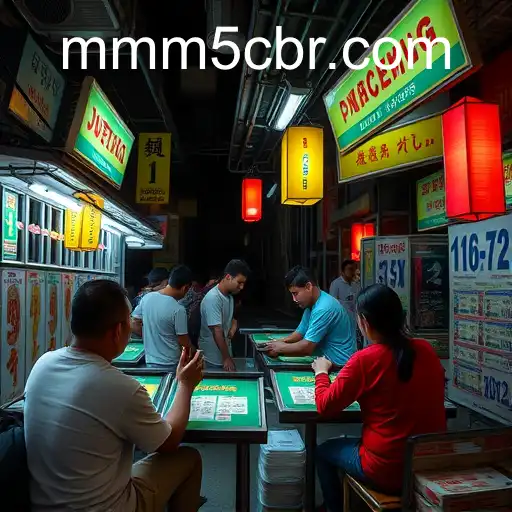
mmm5c | Exploring the Intricacies of Jueteng in the Philippines
mmm5c’s An in-depth analysis of Jueteng, an illegal numbers game in the Philippines, examining its origins, socio-political impact, and survival in the digital age.
Understanding the Underground Dynamics of Jueteng
Jueteng, a numbers game deeply embedded in the cultural and social fabric of the Philippines, is both a controversial and pervasive phenomenon. Despite being illegal, it continues to thrive across the archipelago, symbolizing the complexities of gambling, poverty, and politics intertwined in Filipino society.
The Origin and Evolution of Jueteng
Tracing its roots to the Chinese heritage of the Philippines, jueteng was said to have been derived from the Chinese words 'huay' meaning flower and 'teng' meaning bet. Historically, it served as a form of entertainment and communal activity. Over the years, it has evolved significantly, transitioning from a simple community pastime to a widespread underground gambling industry.
The Mechanics of Jueteng
The game operates on a straightforward principle where participants wager on a pair of numbers from 1 to 37. A winning combination is drawn, and those who have placed their bets on the correct numbers win back a substantial return on their investment, often around 800 to 1 ratio. This simplicity, combined with the lure of quick cash, has contributed to its enduring popularity among the masses, especially in impoverished regions.
The Socio-economic Impact of Jueteng
One of the critical reasons for the persistence of jueteng is its socio-economic significance. It offers a semblance of hope to the economically disadvantaged, who see it as a potential escape from poverty. The promise of an immediate cash reward outweighs the risks associated with its illegal nature. Moreover, jueteng injects millions into local economies, albeit illicitly, by creating jobs for bet collectors, cobradores, and ushers.
Jueteng and Political Allegiances
The intersection of jueteng and politics is palpable. The game's operations often blend into the local and national political spheres, where politicians are implicated in either receiving or providing protection money to jueteng lords. Such dynamics illustrate a mutually beneficial relationship; the operators secure impunity, while politicians gain financial support for their campaigns.
This symbiosis complicates efforts to dismantle or regulate the game, raising questions about governance, ethics, and policy implementation. Allegations of involvement in jueteng have toppled political careers and tainted reputations, yet there seems to be an unyielding resilience within its framework.
Legal Attempts and Their Challenges
The Philippine government's efforts to eradicate jueteng have been persistent but largely unsuccessful. Various administrations have proposed reforms and amnesties, from transforming jueteng into a legalized gaming operation under governmental oversight to imposing stricter penalties for those involved. Despite these attempts, enforcement remains sporadic due to corruption and lack of political will.
The Role of the Church
The Catholic Church in the Philippines has voiced strong opposition against jueteng, urging its followers to reject the temptations of easy money and highlighting the moral decline associated with gambling. The Church's stance positions it as a moral counterweight in the largely secular operation of jueteng. Yet, its influence has wavered, given the pervasive poverty that drives many to partake in the game.
The Digital Age: Jueteng’s New Frontier
As technology continues to reshape society, jueteng too has adapted to the digital age. The advent of mobile technology and online communication platforms has allowed operators to expand their reach, making it even more challenging for authorities to trace and dismantle operations. The anonymity and convenience offered by digital mediums contribute to the game's persistent survival.
Efforts to combat this digital evolution require a nuanced understanding of both technology and the deep-seeded socio-cultural roots of jueteng. Cyber surveillance measures alone are not sufficient; comprehensive strategies addressing the underlying social issues are crucial to any long-term solution.
Jueteng: A Reflection of Society
In conclusion, jueteng serves as a mirror reflecting the multifaceted challenges faced by Filipino society. It embodies the tension between legality and survival, illustrating how deeply entrenched cultural practices can influence socio-political structures. Attempts to address the jueteng issue must therefore consider these various layers, approaching the game not merely as an illegal activity but as a symbol of broader disparities within the nation.
